

The Alliance offers mentoring groups as a membership benefit to psychotherapists who are in their first 10 years of clinical practice in the field of psychotherapy. The primary objective of the Alliance Mentor Program is to support early-career therapists through the challenges of beginning practice.
Mentor Groups are led by mid-career and senior psychotherapists and analysts who volunteer their time. Each group has 4-8 members, and meets at least twice each month. Group formats vary, but typically mentees can expect clinical discussions and case consultation, exploration of psychoanalytic theory and frame, the opportunity for collegial connectedness, and an entrée into the broader Alliance community and its programs. Groups may also consider the pressing concerns of our times, including social, racial and climate justice issues, as they relate to the psychoanalytic tradition and practice of psychotherapy. Each group will develop its own character, based on the person of the mentor, and the desires and experiences of group members.
Registration is closed
Meet Our 2026-27 Mentors
April Crofut, MD

I am a psychiatrist and psychoanalyst with a therapy-focused practice in Portland. I've been in private practice since 2016, after working in community mental health and inpatient settings prior. I completed psychoanalytic therapy training in San Francisco and analytic training at SPSI in Seattle. I've enjoyed teaching foundational psychoanalytic therapy courses and facilitating group supervisions for the past several years. I have a particular interest in theory, ethics, and aligning psychoanalytic practice with social justice. I look forward to meeting more NWAPS colleagues in Portland!
Meeting Cadence: 1st and 3rd Thursdays, 7-8:30 p.m.
First Meeting: September 17, 2026
Last Meeting: June 3, 2027
Group Capacity: 6
Format: In Person
Location: Northeast Portland
Additional Information: I am happy to work from the interests/needs of the group in terms of readings, case consultation, and programmatic discussions. Salman Akhtar has recently published a book of brief tips titled "In Short: Private Notes of a Psychoanalyst," that I am finding engaging for early career therapists; we might use this as a thread within the group.
--
Jamie R. Friddle, MA, LMHC

Jamie Friddle has practiced psychoanalytic psychotherapy since 2013, the same year he joined the Alliance. That year he graduated from Seattle University with a degree in theologically-informed counseling. He later completed the two-year Adult Program in Psychoanalytic Psychotherapy offered through Seattle Psychoanalytic Society and Institute. Many theories of mind inform his practice at Valley Medical Center, where he treats adults and couples in an outpatient setting. If forced to choose a few psychoanalytic influences, they would be Carl Jung, Donald Winnicott, Wilfred Bion, and Sigmund Freud, never in a particular order, and with quite a bit of guilt for not mentioning their torchbearers. His interests include metaphors for the analytic encounter and psychic transformation, such as the diving bell, alchemy, and digestion. He believes silence and intuition are precursors to truth in the analytic relationship, and that this truth, however small and tender, is what heals. He is grossly indebted to his own psychotherapists and his psychoanalyst.
Meeting Cadence: 1st and 3rd Thursdays, 6:30-8 p.m.
First Meeting: September 3, 2026
Last Meeting: May 20, 2027
Group Capacity: 6
Format: ZOOM
Additional Information: My hope is that the group will function as compost for your practice. We can assume that some of what will support your growth cannot be seen or even thought about, but will remain unseen, dosing its nutrients in the dark. The group itself is the compost, and within it we will discuss whatever is coming up for you in your practice. I and others will share experience. If we consult on cases, we will do so gently with a protocol I will suggest. Sometimes readings will be offered or suggested, as well as other resources. A soft structure will frame each meeting to maximize safety and connection around the work. Psychotherapy is one of the strangest and most rewarding occupations of all time. We will keep this in mind.
--
Carol Poole, MA, LMHC

I’ve been in private practice for twenty years, working with adults and couples. My practice is informed by psychoanalysis and by contemporary theories of the neuroscience of trauma. Recently I’m learning more about neurodiversity as well. I value complexity and surprise as signs of life.
These days, I think about the challenges newer therapists face. I know what a difference it makes to find the right mentors and colleagues. I believe our larger community needs what we have to offer, more than ever: thoughtful, compassionate, reflective ways of being human together. To work with people who are facing unusually stressful times, we therapists need robust frameworks of care for ourselves, too.
This will be my fourth mentoring group, and my first in recent years. I’m excited to meet people in their earlier phases of practice-building, whether for the first time or re-entering the field after a hiatus, and look forward to creating a supportive learning group together.
Meeting Cadence: Every other Wednesday, 4:30-6 p.m.
First Meeting: September 9, 2026
Last Meeting: May 19, 2027
Group Capacity: 6
Format: In Person
Location: Madison Valley
Additional Information: The group will build a reading list together, based on participants' interests.
--
Kim Richan, LICSW

A therapist for 15 years, my practice blends psychoanalytic and somatic approaches. I am trained as a social worker and self psychology and attachment theory contribute to my thinking about the clinical encounter. I’ve supervised masters-level clinicians and psychiatry residents. What keeps me invested in this work is curiosity about what makes it difficult — not just technically, but most importantly, personally.
This group is organized around the conviction that knowing yourself, and letting yourself be known, is foundational to sound clinical practice.
Beyond functions of a typical consultation group, we’ll focus on the use of self as a clinical instrument — which means being curious about how your clinical work lands in you. How it resonates, disturbs, or goes quiet. This requires a willingness to be vulnerable.
This is an experience-forward group — learning happens in the room, in the exchanges between you, fellow group members, and me, not in readings or theory. I look forward to meeting you.
Meeting Cadence: Every other Friday, 12-1:30 p.m.
First Meeting: September 18, 2026
Last Meeting: June 25, 2027
Group Capacity: 6
Format: In Person
Location: Madison Valley
--
Rebecca Brabo Silva, MA, LMHC

I have been a therapist for over 20 years, grounded in relational psychodynamic psychotherapy. I approach clinical work with openness and curiosity, providing non-judgmental support in consultation and group facilitation. My goal is to stand alongside you in your development as a therapist while offering structure, encouragement, and alternative ideas. My hope is to empower our group to share the diverse perspectives that come from the breadth of life experience in the room. Together we can shape our own agenda including case consultation, readings, and discussions on success in private practice and community mental health centers.
In my own practice, I support clients with relationships, trauma, mood instability, and self-esteem, specializing in women’s reproductive issues and stress management in the tech sector. In 2024, I earned an Advanced Training Certificate in Ecopsychology, exploring nature’s impact on mental health. In addition, I offer supervision and consultation, and am excited to be a part of the NWAPS mentorship program.
Meeting Cadence: Every other Wednesday, 6-7:30 p.m.
First Meeting: September 23, 2026
Last Meeting: June 2, 2027
Group Capacity: 7
Format: In Person
Location: Eastlake
--
Coll Thompson, MA, LMHC

I have spent the last 20 years working with individuals in a variety of health, mental health, and advocacy settings. In 2018 I transitioned (with the aid of the Alliance mentorship program!) from work in a community mental health agency to a private therapy practice where I work primarily with queer and trans individuals and polyamorous couples/relationship units.
Meeting Cadence: Every other Tuesday, 7-8:30 p.m.
First Meeting: September 7, 2026
Last Meeting: May 31, 2027
Group Capacity: 6
Format: ZOOM
--
Jordan K. Wolfe, LMHC, CGP
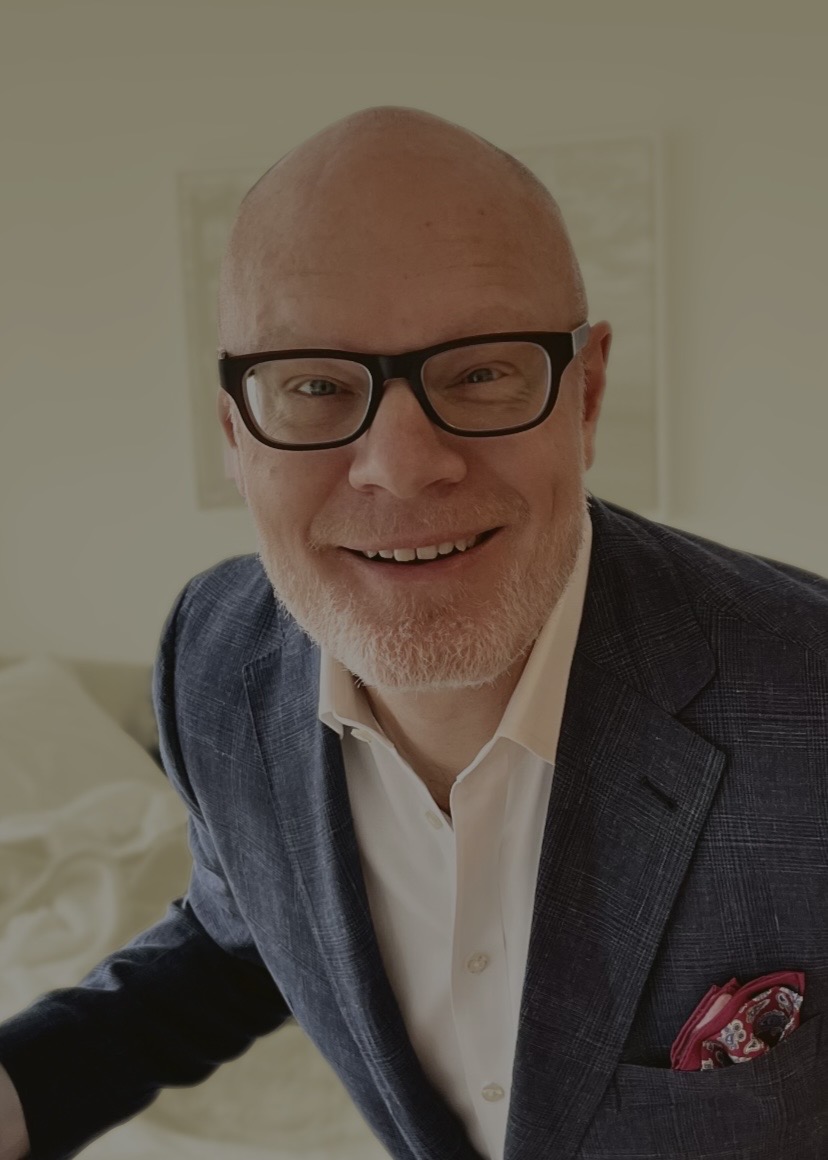
Jordan is a Seattle-based psychotherapist, group facilitator and executive coach who has been in private practice since 2015. He has a Master's degree in Integral Counseling Psychology from the California Institute of Integral Studies (2010), is an AGPA Certified Group Psychotherapist, Certified CIMBS therapist (Complex Integration of Multiple Brain Systems), and is a graduate of the Executive Development Program from the UW Foster School of Business. His dynamic and eclectic approach is informed by his diverse experiences of being a boxer, Buddhist monk, business owner, Army intelligence analyst, Arabic linguist, father, yoga teacher and musician.
Meeting Cadence: Every other Thursday, 12-1:30 p.m.
First Meeting: September 10, 2026
Last Meeting: June 3, 2027
Group Capacity: 6
Format: In Person
Location: Northgate - Haller Lake
Additional Information: This group will utilize readings, case consultation, role-playing, free-range dialogue and here-and-now process to address a wide range of issues, challenges, and developmental needs especially pertinent to newer clinicians. Particular areas of interest will include sustainability, joy creativity, and self-care in our clinical work, as well as the process of launching and growing a thriving private practice.
Program Requirements
- Group members must hold and maintain a current Alliance Membership. If you are not already an active Alliance member, please join or renew your membership prior to choosing a Mentor Group. Membership will be verified.
- Register for your group, and pay the registration fee of $150 for the 9 month term.
- Complete and submit the Mentoring Group Intake Form
- Arrange with your mentor to meet briefly, prior to the start of your group, for introductions and an orientation to your group. Your mentor will contact you to schedule after registration.
- Attend all group sessions, barring unforeseen circumstances or conflicts. Please verify that you are able to meet the schedule requirement for your group before registering. Each group meets for 1.5 hours, at least twice a month.
The Mentor Program is dedicated to surfacing and addressing explicit and implicit bias in ourselves, our clinical work, and our education, recognizing the long history of exclusion of certain groups in our training institutes and programs, and the quieting of their voices in the study, and important work, of psychotherapy.
See the FAQs for more information. If you still have questions that haven’t been answered, please email mentoring-groups@nwaps.org.
FAQs
Can I attend the first group to decide if it’s a good fit for me?
No. Like other classes, mentor groups ask for an upfront commitment that entails some risk to join. Mentors will contact each participant ahead of the first meeting. Speaking one-on-one with the mentor is an opportunity to begin building a positive relationship with your group. This initial conversation is also an opportunity to uncover potential conflicts that could indicate the group will not be a good fit.
What do I do If there is a clinical conflict with another participant or case material?
If you discover that you have a clinical conflict with another member in the group, please speak with your mentor to discuss the situation. In the case of dual relationships, it may be best to leave the group. If you discover that you have a clinical conflict with a case that is being presented, i.e. you have a personal connection to the case, please speak up right away so you can excuse yourself from the group consultation. Another option would be to make it known in your group that you’ve become aware of a conflict with the case material and work with your group to decide how to proceed. In all situations, you are encouraged to speak with your mentor about the issue. If you feel you need more help sorting through the dynamic, feel free to reach out to the Mentoring Program administrator.
Will I be the only person of color in my group? Can I know that in advance?
You may be the only BIPOC therapist in your group. That will likely not be known in advance, as group membership is self-selected, and we currently do not have any BIPOC-only groups. Mentor groups will not hold the expectation for any one person to represent all BIPOC therapists, clients and population groups. The mentor program is actively engaged in challenging systemic racism and bias perpetuated in psychoanalytic materials and group dynamics. Please work with your mentor to address any concerns you may have in your group. You may also reach out to the program admin, who will advocate for repair and resolution on your behalf. We appreciate you bringing any negative experiences to our attention, and will take all concerns seriously.
If I find that I’m the only person holding a specific identity in my group, can I change groups?
Placement in a mentor group is by self-selection at the time of registration. The potential exists to be the only female, male, non-binary person or other identifier in a mentor group. Mentoring groups are offered to the early-career therapist to foster professional and clinical development. We ask that you allow time for your group to build a degree of trust with one another, and that you share your concerns with your mentor so that we can work towards a solution. Placement in another group may be possible, but cannot be guaranteed due to space limitations.
I want to leave my group before the end of the term. Can I do so?
The expectation is that participants who register for full 9-month groups will attend for the duration of the group. No refunds can be given for early termination of a mentor group during the course of the program year. If you need to leave the group for an unforeseeable reason, you and your group may benefit greatly by openly discussing the ending. Please discuss this with your mentor as soon as you suspect a disruption to your participation.
Do you offer sliding scale or are scholarships available?
No sliding scale rates or scholarships are available for mentor group registration. Mentor group fees have been established to reflect the real cost of NWAPS administration of this volunteer-run program. The fee charged for a mentor group, moderated by a senior clinician, is an extraordinary value relative to what consultation groups offered in private practice generally charge. We will continue to keep the costs as low as possible.
Why do I have to be an Alliance member to join?
The Mentoring Program is one of the core benefits of joining NWAPS and reflects the mission and vision statement of the Alliance to promote psychoanalytic learning in the community. Limited space is available each term, so access to the Mentoring Program remains a benefit of membership, and is not open to the psychotherapy community at large.
I don’t know anything about psychoanalytic theory—is that OK?
Mentor groups are designed to be a gateway into learning how to listen and think psychoanalytically. Topics range from the basics of theory and practice of psychodynamic and psychoanalytic models, to the nuts and bolts of starting out in private practice. Some suggested readings may be challenging for participants who have not read psychoanalytic theory before, but the groups are designed to support new learning and do not hold rigorous academic expectations. Peer-to-peer consultation predominates in most groups, and diverse voices and experiences are welcomed.
I don’t have any clinical experience yet—is that OK?
Participants who get the most out of mentor groups, and feel they have the most opportunity to contribute to the life of the group, typically have clinical experience. If you are eager to listen and learn about psychodynamic/ psychoanalytic theory and practice,but don’t yet have any clinical experience, please contact the administrator to learn about the other educational offerings provided by NWAPS this year. The mentor program has been in continuous operation for many years, so it’s OK to wait until you have clinical experience to join a group!
I’ve only worked with people via telehealth. Can the mentors support me?
Like you, our mentors are experienced working psychodynamically and psychoanalytically over video platforms. We expect to serve many new therapists who graduated during the pandemic and may never have worked in-person. Much discussion and reflection has ensued in recent years about the impact of telehealth on our practices, and your mentor will be able to support you where you are.
I’m still in my graduate program. Can I join a group?
No. Mentor groups are for clinicians in their first 10 years of practice. We ask that you have completed the academic portion of your graduate program, and have started seeing clients in your internship setting, before joining a mentor group.
I’m in my internship. Can I join a group?
You may register for a mentor group if you are actively seeing patients in a clinical setting as a part of your internship. If you are in your internship, regular supervision with a licensed clinical supervisor is required. Mentor groups are not a substitute for personal psychotherapy, nor a substitute for the case supervision required for licensure. Please add the name of your graduate program, your internship site and the name of your supervisor to the intake form.
Do mentor groups count for supervision towards licensure or offer CEUs?
No CEU’s are offered for mentor group hours. Mentor groups DO NOT count towards supervision for licensure. Mentors have no legal liability for case consultation.
I work with children/couples/families/etc. Is there a mentor group for me?
Mentors welcome clinicians who work with children, couples, families or groups, and there may be a mentor who specializes in your interest area. While not every mentor will maintain a practice geared towards the specific population you serve, all the mentors have the educational background and professional experience to allow them to thoughtfully tailor their input to your work.