

Scholarly Dialogues--formerly called Masterclass, is an open discussion and learning session where small groups gather together with important scholars in the field to discuss 1-2 papers from their body of work. The intimacy of the setting allows participants to be able to ask personal questions about the author's ideas and share some of their own reactions and thinking about the material. Papers will be distributed in advance to registered attendees.
Recent Works on Bion with Nicola Abel-Hirsch, FIPA
Bion’s Cogitations 1958-1979: seven subjects in his private notes
Subject ONE is ‘the individual and the group’, and includes the possible clinical consequences of becoming more independent of the Klein Group in the late 1950s (the most intense period of his cogitations). Subject TWO is ‘frustration’. I will draw on the work of neuroscientist and psychoanalyst Mark Solms to suggest that in his attention to frustration Bion is pointing to a different group of instincts alongside those already explored by Freud and Klein. Subject THREE is ‘’a’-function' (alpha-function), through which Bion examines the way ‘what can’t yet be thought’ (of external or internal origin) becomes ‘thinkable’. In cogitations written around the time he returned to the WW1 battle fields, Bion goes into the significance of being able to think as only someone who has experienced not being able to think can. FOURTH is the trust he has throughout the cogitations in the relation between the ‘paranoid-schizoid’ and depressive positions’, a trust that may go back to his analysis with Klein. FIFTH is ‘induction’ (in undated cogitations in the 1960s). I don’t think we fully realise yet the implications of his questioning the established model of contact with reality as involving the ‘collection’ (taking possession of) of facts. SIXTH is his 1968 cogitation on ‘memory and desire’, in which we unusually get some sight of the possible consequences he suffered himself in pursuing this discipline. In the last and SEVENTH subject we will look at some of what he says in his later cogitations about the relationship between language and ‘O’, and the implications of this for the relationship between interpretation and ‘O’.
Learning Objectives:
At the end of the session participants will be able to:
- Identify key developments in Bion’s theoretical contributions.
- Apply fundamental Bionian concepts to clinical case material.
- Differentiate the major phases of Bion’s work.
- Assess recent scholarship on Bion and its relevance for contemporary psychoanalytic practice.
Nicola Abel-Hirsch, FIPA
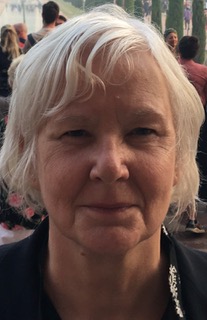
Nicola Abel-Hirsch, FIPA, is a training analyst of the British Psychoanalytical Society. She edited Hanna Segal's Yesterday, Today and Tomorrow (2007); is the author of Bion 365 Quotes (2019) and Bion: An Introduction (2023), and is a co-author of Bion in the Consulting Room with Joseph Aguayo, Sira Dermen and Bob Hinshelwood (2024). Under the auspices of Understanding Primitive Mental States New York City (Susan Finkelstein, Chair) she is currently presenting a series of seminars on Bion's work.
Participation Fees Limited to 15 participants | ||
| Alliance Members | $155 plus tax | |
| Alliance Non-Members | $185 plus tax | |
Cancellation Policy
Cancellations must be submitted at least 14 days prior to the event to receive a refund, minus an administrative fee of $50.
Cancellations made less than 14 days before the event are non-refundable.
Exceptions may be considered on a case by case basis.
To request a refund or an exception, please contact admin@nwaps.org.
Continuing Education: This program is available for 2.50 continuing education credits. Participants must attend 100% of the program. Upon completion of the class evaluation, a certificate will be issued. This serves as documentation of attendance for all participants. Psychologists will have their participation registered through SPPP, Division 39. APS and SPPP are committed to accessibility and non-discrimination in continuing education activities and will conduct all activities in conformity with the American Psychological Association’s Ethical Principles for Psychologists. If participants have special needs, reasonable efforts will be made to accommodate them. There is no commercial support for this program nor are there any relationships between the CE Sponsor, presenting organization, presenter, program content, research, grants, or other funding that could reasonably be construed as conflicts of interest.
SPPP (Division 39) is approved by the American Psychological Association to sponsor continuing education for psychologists. SPPP maintains responsibility for the program and its content.


