

Course: Defense Against Entropy: A Neuropsychoanalytic Exploration
This course will offer a brief overview of psychoanalytic defense theory in order to share findings from the field of neuropsychoanalytic theory, as laid out by Dr. Mark Solms. Through clinical reflection, we will begin to see defenses not as psychic maneuvers to avoid unwanted content but instead as parts of the foundational function in self-organizing systems. We will define the concepts of entropy, homeostasis, and the Markov blanket (Solms, 2021) before connecting them to the psychoanalytic-psychotherapeutic process. Some questions we will consider: Why does the psyche defend itself against change with the same urgency a living organism defends itself against death? And why do some psyches seek out and engage with a process like psychoanalysis—a process that could be described as a voluntary movement toward increased entropy? The course will close by connecting this framework to the clinical encounter: the moment-to-moment negotiation between connection and separateness that defines the therapeutic relationship.
Much value is to be gleaned from the knowledge that successful analytic work defies the imperatives to resist entropy and preserve homeostasis. This enigma is what reminds us of the indefinable art of connection in psychoanalytic relationship-building.
Class Type: Course
Location: Virtual via Zoom
Fees Member $125/Non-Member $150
Max Capacity: 15 people
Learning Objectives:
- After taking this course, participants will be able to define and discuss the concepts of: Free Energy (Friston), Entropy (C. Shannon, M. Solms), Homeostasis (Panksepp) and the Markov Blanket (A. Markov), specifically applied to the clinical encounter.
- Participants will be able to relate and apply these concepts to defense presentations in the clinical setting, and the movements of connection & separation between patient and clinician.
- Participants will have engaged in discussion and dialogue about possible connection between Defense/Protection against entropy, and the concept of a Death Drive/Instinct
References:
Eccleston, Christopher. (2018). Chronic pain as embodied defence: implications for current and future psychological treatments. Pain. 159 Suppl 1. S17-S23.
Lingiardi, V., & Madeddu, F., (2025). Revisiting defense mechanisms in contemporary clinical practice: evidence and perspectives. Research in Psychotherapy: Psychopathology, Process and Outcome, 28(3), 877.
Rabeyron T, Massicotte C. Entropy, Free Energy, and Symbolization: Free Association at the Intersection of Psychoanalysis and Neuroscience. Front Psychol. 2020 Mar 17;11:366. doi: 10.3389/fpsyg.2020.00366. PMID: 32256426; PMCID: PMC7093713.
Solms, M. (2021). The hidden spring: A journey to the source of consciousness. W. W. Norton & Company Ltd.
Solms, M. (2026). The only cure: Freud and the neuroscience of mental healing. Weidenfeld & Nicolson.
Additional: (not in order)
Gerber, L. (2010). Death/Life: Reflections on Reading Ferenczi. Psychoanalytic Perspectives, 7(1), 153– 160. https://doi.org/10.1080/1551806X.2010.10473079
Eekhoff, J.K. The unwelcome child and a lack of acceptance of new ideas. Am J Psychoanal 82, 256–267 (2022). https://doi.org/10.1057/s11231-022-09355-w
Cancellation Policy: If you need to cancel your purchase, please do so before November 25, 2026 by emailing admin@nwaps.org to request a refund minus a 30% cancellation fee. We are unable to process or offer any refund for cancellations made after November 25, 2026. Allow 2-4 weeks to process your refund request. Note that participation in the entire event is required to obtain CE credits.
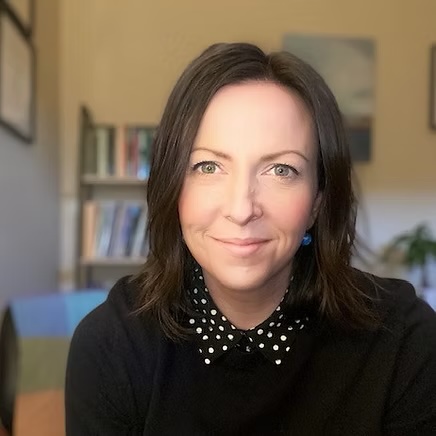 Speaker Bio: Gloria Dykstra is a clinical psychotherapist in Vancouver, BC (from Seattle, Washington). She completed her Master's degree at Seattle University in the Existential-Phenomenological Therapeutic Psychology program, in 2008. She has been doing clinical work since 2007, with the exception of 2011-2015 when she and her family lived in Dublin, Ireland. Her husband Wayne completed his Ph.D. in Liberation Psychology at University College Dublin. In 2015, after their return to Seattle, Gloria and Wayne started their private practice with a focus on trauma healing with explicit acknowledgment of political context and systems of oppression. Their work is still grounded in the existential phenomenological traditions but has since evolved to include more psychoanalytic influence. Gloria has had a longstanding interest in the ways our bodies viscerally tell the stories of what has been difficult to bring to consciousness and has found deep resonance with the work of Dr. Mark Solms; relating neuroscience to psychoanalysis.
Gloria received clinical supervision from her mentor Dr. Lane Gerber, Ph.D., ABPP, during several periods between 2008 until the time of his passing in 2023. Her ethical frame and way of sitting with every person is intimately shaped by Dr. Gerber. Since 2024, Gloria has been clinically supervised by Dr. James Fabian, MD, FIPA, in Vancouver, BC. She and her husband, Dr. Wayne Dykstra, raise their two teen daughters and have a private practice in the Downtown Eastside in Vancouver focusing primarily on complex trauma, grief, relational wounds and the ways we learn to cope.


