

Scholarly Dialogues: Dianne Elise "Analytic Eroticism: Embodied Vitality in Clinical Process"
In our group discussion, we will consider a Winnicottian formulation of the analytic field in order to understand the often unspoken, implicit erotic dimensions of analytic work. Material from an analysis with a very inhibited, emotionally-constricted man shows both patient and analyst encountering difficulty in “locating” one another within the analytic field. Movement in the treatment requires a sensing in the body for the “feel” of the analytic dyad, a kinetic reading of emotional closeness or distance, indicating subtle, and shifting, tones of the relationship. Emphasis will be placed on bodily experience in a subjective registering of the erotic, both as sexuality and as a more general experience of passion, vitality and creativity.
We will next explore the relationship between solace and lament through my conceptualization of the solacing function of the analyst: This active, yet gentle, approach toward a patient can locate unrepresented experiences of loss in order to stimulate lament and a process of mourning. Grievance, as a protracted state, will be discussed as a pseudo ‘lament’ that, as a static stance, forms an impenetrable barrier to a registering of grief. Clinical material illustrates challenges of foreclosed mourning.
Learning Objectives:
- Describe how the concept of analytic eroticism might be used to develop an understanding of the role of embodied vitality within clinical process.
- Discuss how sexuality relates to a more general experience of passion, vitality and creativity.
- Identify the way in which grievance defends against grief.
Speaker Bio:
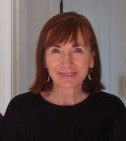 Dianne Elise, Ph.D., is a Personal and Supervising Analyst, Psychoanalytic Institute of Northern California, a Training Analyst, International Psychoanalytic Association, and has served on the Editorial Boards of the Journal of the American Psychoanalytic Association and Studies in Gender and Sexuality. Her over 40 psychoanalytic publications include journal articles and book chapters on a wide range of subjects. She has written about various aspects of clinical creativity for 25 years, culminating in her 2019 book with Routledge, Creativity and the Erotic Dimensions of the Analytic Field -- featured in a New Books in Psychoanalysis podcast, August, 2024. Her two most recent publications, “The Sounds of Silence: Embodied Registers, Erotic Reverie”, and “Solace” present her contemporary thinking on creativity and libidinal vitality in clinical treatment. She is in private practice in Oakland, California.
Special Instructions: Scholarly Dialogues--formerly called Masterclass, is an open discussion and learning session where small groups gather together with important scholars in the field to discuss 1-2 papers from their body of work. The intimacy of the setting allows participants to be able to ask personal questions about the author's ideas and share some of their own reactions and thinking about the material. Papers will be distributed in advance to registered attendees.
15 PEOPLE MAX FOR THIS EVENT
Cancellation Policy: If you need to cancel your purchase, please do by emailing admin@nwaps.org to request a refund minus a 30% cancellation fee. Allow 2-4 weeks to process your refund request. Note that participation in the entire event is required to obtain CE credits.


